George Kimmerling
Artist Statement
I’m interested in art as a means of inquiring about our experience and perception of place, the construction of collective and individual memory and identity, and the relationship between the public and private spheres. I use photography as a tool to investigate social and personal themes—and the intersection between them. As an artist primarily concerned with the landscape as a constructed, interpreted, and contested idea, I strive to ensure my work is in dialogue with the history of photography and the ways in which the medium has been deployed to create and communicate ideas about sites and spaces.
I am submitting images from my project "The Unfinished History of Dennings Point," which explores a 64-acre site on the Hudson River as a social and political landscape
I began the project after finding a brick in my Westchester garden marked with the initials “DPBW.” I discovered the brick was made at Dennings Point Brick Works, one of the largest Hudson Valley brick makers at the turn of the 20th century. DPBW bricks were used in large civic projects, including the Empire State Building and Rockefeller Center. Now a state park, Dennings Point itself has a much more complicated—and distinctly American—history marked by shifting boundaries between public and private space, racial and class conflict, unbridled industrialism, and environmental degradation.
In the 350 years since prominent Dutch enslavers took possession from the Wappinger people of Dennings Point as part of the 85,000-acre Rombout Patent, the area has been the site of estates, reported sojourns by Revolutionary War figures (including George Washington and Alexander Hamilton), an archaeological dig in the 1880s that unearthed Native American remains, the massive brick factory (which instituted a whites-only hiring policy in 1920s), a railway project for which the forest was clear-cut, a public swimming beach, and a short-lived environmental center, which the sponsoring university withdrew from just last year.
Some chapters in this history are well-documented, others often elided, especially from public signage. As I continue this project, I hope it can express a more holistic, inclusive, and complex understanding of this and similar sites as deeply contested and embedded in the power structures that have shaped them and that lie at the core of U.S. history.
Portfolio
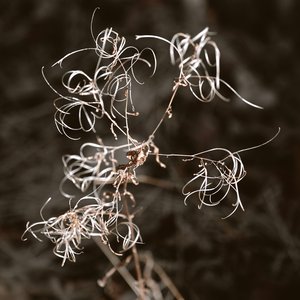
Kimmerling Untitled, No. 44 (fringed willowherb) 2025 archival pigment print, 20x20 1:5
Archival pigment print
$500
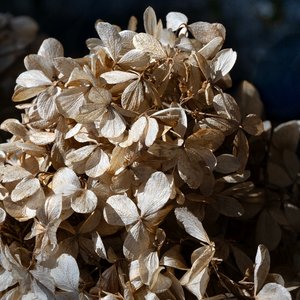
Kimmerling Untitled, No. 46 (bigleaf hydrangea) 2025 archival pigment print 20x 20 1:5
Archival pigment print
$500
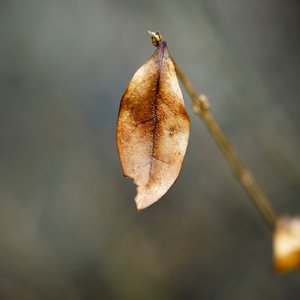
Kimmerling Untitled, No. 52 (California privet) 2025 archival pigment print 20x20 1:5
Archival pigment print
$500